
Discover a fantastic collection of soccer drills, designed for young athletes aged 7-8, focusing on fun, skill development, and teamwork – perfect for beginners!
These drills, easily accessible as downloadable resources, emphasize dribbling, passing, shooting, and shielding, creating a positive learning environment for all players.
Importance of Age-Appropriate Training
For 7 and 8-year-old soccer players, training must prioritize enjoyment and foundational skill development. Complex tactics are less crucial at this stage; instead, focus on building a love for the game through engaging drills.
Age-appropriate drills, often found in readily available PDF resources, ensure activities align with their physical and cognitive abilities. This prevents frustration and promotes positive reinforcement.
These drills should be simple, repetitive, and emphasize fundamental movements like dribbling, passing, and shooting. A playful approach, like “Animal Soccer,” fosters creativity while reinforcing technique.
Properly scaled training builds confidence, encourages participation, and establishes a solid base for future soccer success, making learning fun and effective.
Focus on Fun and Engagement
Maintaining a playful atmosphere is paramount when coaching 7-8 year olds. Drills should be presented as games, fostering enthusiasm and minimizing pressure. PDF resources often include variations to keep practices fresh and exciting.
Incorporating imaginative elements, such as the “Animal Soccer” drill, transforms skill-building into a captivating experience. Encourage creativity and allow players to express themselves while dribbling or passing.
Short, dynamic activities prevent boredom and maintain focus. Frequent changes and positive reinforcement are key to keeping young players engaged.
Remember, at this age, the primary goal is to instill a love for soccer, not to create miniature professionals. Fun drills build confidence and a lifelong passion for the sport.
Essential Soccer Skills for This Age Group
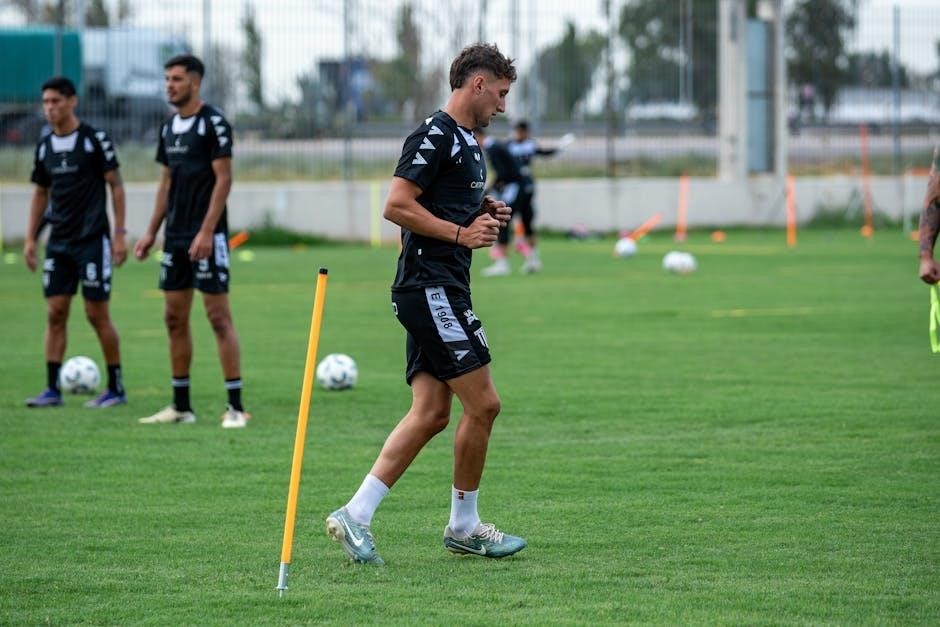
Focus on foundational skills: dribbling, passing, shooting, and shielding. PDF resources provide drills to develop these core competencies in a fun, age-appropriate manner.
Dribbling Fundamentals
Dribbling is paramount at this age, building confidence and ball control. PDF resources offer drills like the “English Bulldog” variation, increasing intensity while mastering close control;
Cone weaving drills enhance agility and precision, guiding players through obstacles. Animal Soccer – a creative approach – encourages imagination while dribbling, mimicking animal movements.
These exercises focus on using both feet, keeping the ball close, and looking up periodically. Emphasis should be on fun and repetition, fostering a comfortable relationship with the ball. Progressive drills build from simple touches to more complex maneuvers, preparing them for game situations.
Passing Techniques
Introducing basic passing is crucial, focusing on accuracy and technique. PDF guides detail partner passing drills, starting with short distances to build confidence and control.
Target passing exercises improve precision, having players aim for specific cones or teammates. Emphasis is placed on using the inside of the foot for controlled passes.
Coaches should encourage communication and awareness of surroundings. Drills should progress from stationary passing to passing while moving, simulating game scenarios. Reinforce the importance of supporting teammates and receiving passes with a soft touch, fostering teamwork.
Shooting Basics
Introduce shooting with simple drills focusing on technique over power. PDF resources showcase shooting at a stationary goal, emphasizing proper foot placement and follow-through.
Progress to shooting after dribbling, combining ball control with finishing skills. Encourage players to keep their eyes on the target and strike the ball with the laces.
Coaches should emphasize accuracy and consistency. Drills should incorporate different shooting angles and distances. Reinforce the importance of a quick release and following through towards the target, building confidence and scoring ability.
Shielding the Ball
Shielding is a crucial defensive skill for young players. PDF guides detail drills where players protect the ball from an opponent using their body as a barrier.
Focus on keeping the ball close, using soft touches, and creating space. Encourage players to use their arms to fend off opponents while maintaining possession.
Drills should start with one-on-one scenarios, gradually increasing the pressure. Emphasize awareness of surroundings and quick reactions. Reinforce the importance of balance and a strong core for effective shielding.
Warm-Up Drills
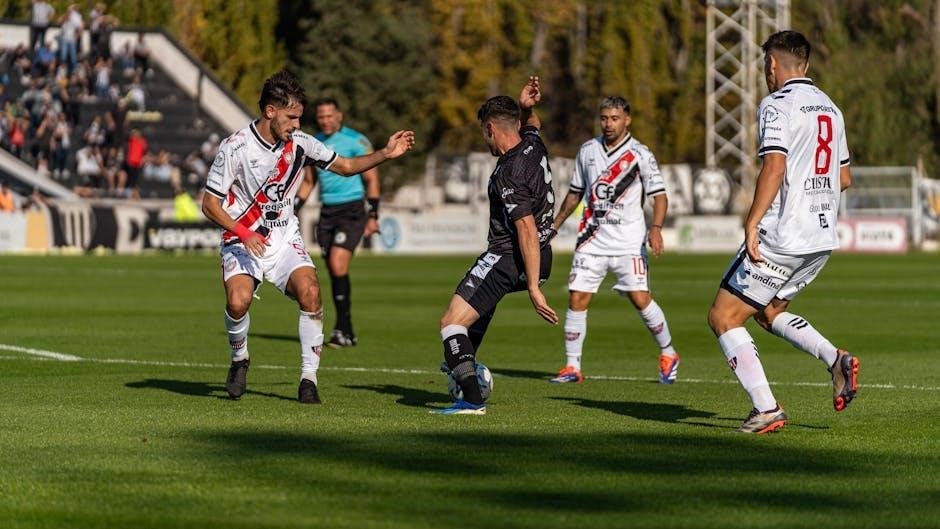
Prepare young players with dynamic stretches and light jogging, enhancing flexibility and ball familiarity – find detailed instructions in downloadable PDF guides!
Dynamic Stretching for Young Players
Before any soccer activity, dynamic stretching is crucial for preparing young muscles and preventing injuries. Unlike static stretches, dynamic movements actively warm up the body. Include exercises like leg swings (forward, backward, and sideways), arm circles, torso twists, and high knees.
These movements increase blood flow and range of motion, vital for 7-8 year olds. Downloadable PDF resources often provide visual diagrams and step-by-step instructions for coaches. Focus on controlled movements, emphasizing proper form over speed. Encourage players to mimic the coach and have fun while preparing their bodies for the drills ahead!
Light Jogging and Ball Familiarization
Begin each session with light jogging to elevate heart rates and prepare players physically. Combine this with ball familiarization exercises – simple tasks like toe taps, sole rolls, and gentle pushes with the inside and outside of the foot.
These activities build confidence and comfort with the ball. PDF coaching materials often detail specific progressions for these drills. Keep it playful and encourage creativity! Focus on individual ball control, not passing or complex maneuvers. Ensure a safe space, free of obstacles, allowing young players to explore movement with the ball at their own pace.

Dribbling Drills
Explore engaging dribbling drills like “English Bulldog” and cone weaving, fostering ball control and agility – find detailed diagrams in downloadable PDF guides!
The “English Bulldog” Variation
This dynamic drill, a modified version of the classic “English Bulldog,” enhances intensity and quickness. Begin by designating players as “sharks” positioned centrally, while others are “minnows” each with a soccer ball at the perimeter.
The objective for minnows is to dribble safely across the playing area without losing their ball to a shark. Sharks attempt to steal balls, encouraging quick footwork and protective ball control.
Adjust the playing area size based on age and skill level; smaller for younger players. PDF resources offer visual diagrams and coaching tips for effective implementation, ensuring a fun and challenging experience for all participants.
Cone Weaving Drills
Cone weaving drills are fundamental for developing agility, close ball control, and coordination in young players. Arrange cones in a line or a more complex pattern, challenging players to dribble through them without knocking them over.
Encourage players to use both feet and maintain a consistent pace. Variations include timing the drill or adding a competitive element, like racing against a teammate.
Downloadable PDF guides provide cone setup diagrams and progressive drill levels, catering to different skill levels. This drill builds confidence and prepares players for more complex game situations, enhancing their overall dribbling proficiency.
Animal Soccer – Dribbling with Imagination
Animal Soccer transforms dribbling practice into a playful adventure! Assign each player an animal – lion, tiger, monkey – and instruct them to move and dribble like that animal.
This encourages creativity, imagination, and reinforces fundamental dribbling skills in a fun, engaging way. Players naturally experiment with different movements and ball control techniques.
PDF resources offer animal suggestions and drill variations, promoting adaptability and problem-solving. It’s a fantastic way to keep young players motivated while developing their soccer abilities, fostering a love for the game.
Passing Drills
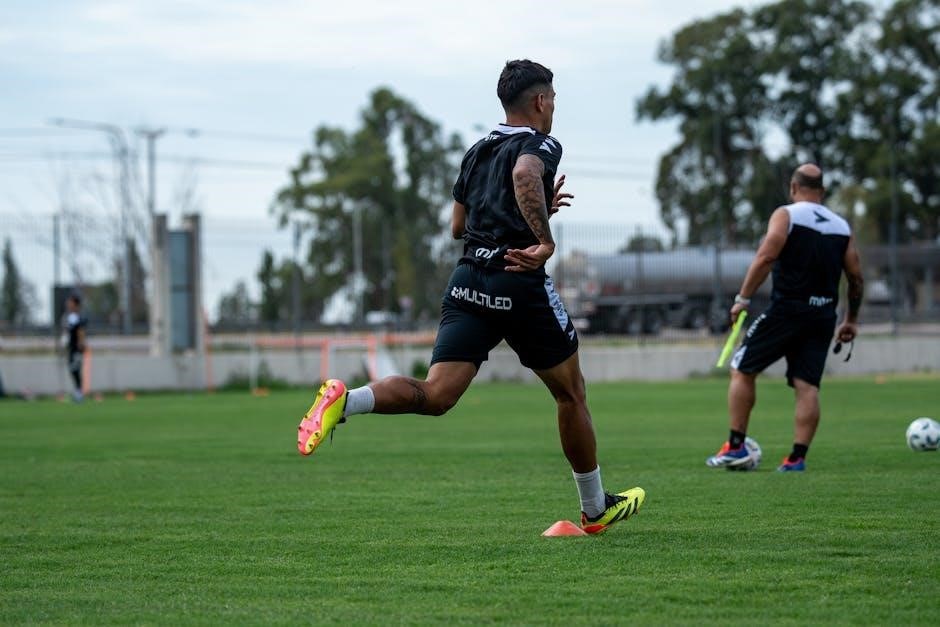
Explore simple passing drills, like partner passing at short distances and target passing, building accuracy and teamwork – available in downloadable PDF guides!
Partner Passing – Short Distances
This foundational drill focuses on developing basic passing technique and accuracy; Players pair up, positioned approximately 5-10 feet apart. The emphasis is on using the inside of the foot to pass the ball to their partner, aiming for a controlled reception.
Coaches should encourage players to maintain a slight bend in their knees and follow through with their passing motion. Start with stationary passing, then gradually introduce a slight movement between passes. Downloadable PDF resources often include diagrams illustrating proper foot placement and body positioning.
Progression involves increasing the distance slightly or adding a gentle jog between passes, enhancing both passing and receiving skills. This drill builds confidence and establishes a fundamental understanding of passing principles.
Target Passing
Elevate passing accuracy with target passing! Set up various targets – cones, small goals, or even designated spots on a wall – at varying distances. Players practice passing the ball towards these targets, focusing on precision and control.
This drill encourages players to visualize their pass trajectory and adjust their technique accordingly. Coaches can assign points for hitting targets, adding a competitive element. Downloadable drill diagrams often showcase target placement ideas and progressive difficulty levels.
Progression includes using different passing surfaces (inside foot, outside foot) and increasing the distance to the targets. Target passing builds confidence and refines a player’s ability to deliver accurate passes under pressure.
Shooting Drills
Develop fundamental shooting skills with drills focusing on technique and accuracy, utilizing stationary goals and incorporating dribbling before shooting – find PDFs online!
Shooting at a Stationary Goal
Begin with simple shooting exercises where young players practice striking the ball towards a stationary goal. Focus on proper foot placement, a controlled approach, and following through with the kicking motion. Encourage them to aim for specific targets within the goal to improve accuracy.
Coaches can gradually increase the distance from the goal as players gain confidence. Introduce variations like shooting with both feet and using different parts of the foot (inside, laces). Downloadable drill diagrams (PDFs) often illustrate these setups, providing visual guidance for coaches. Remember to emphasize technique over power at this age, building a solid foundation for future development. This drill is a cornerstone for building shooting confidence.
Shooting After Dribbling
This drill combines dribbling skills with shooting accuracy. Players dribble towards the goal, then execute a shot. Start with slow, controlled dribbling, emphasizing keeping the ball close. As they progress, encourage faster dribbling while maintaining control. Coaches should focus on the transition from dribbling to shooting – a smooth, quick movement.
PDF resources often provide cone setups to simulate game-like scenarios. Variations include dribbling around cones before shooting or incorporating a defender. The goal is to develop the ability to create shooting opportunities through dribbling. Prioritize technique and accuracy over power, building a well-rounded skillset.
Small-Sided Games
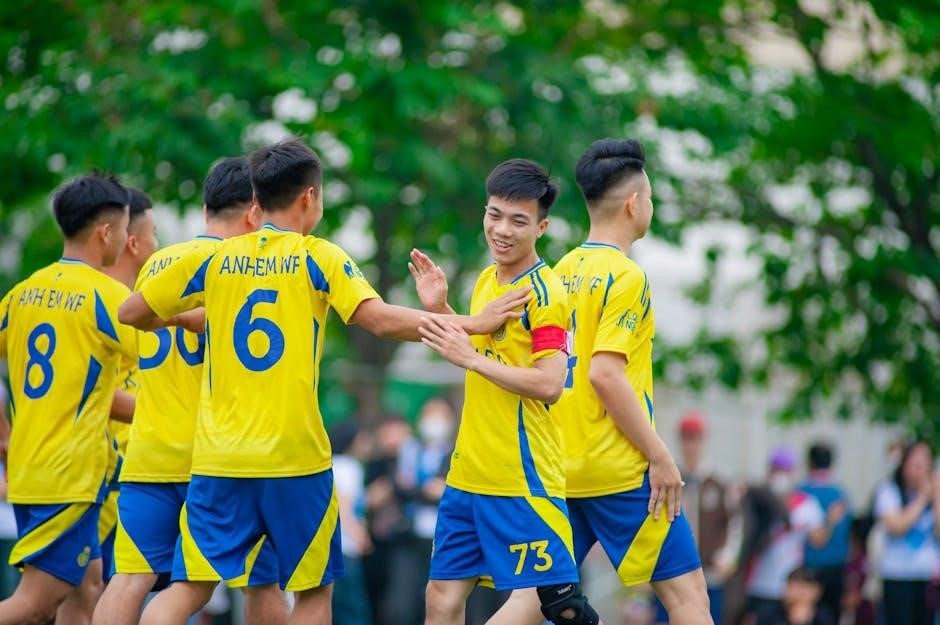
Engage young players in 3v3 or 4v4 scrimmages, applying learned skills in a game environment, fostering teamwork and quick decision-making.
3v3 or 4v4 Scrimmages
These smaller-sided games are incredibly valuable for 7-8 year olds, providing ample opportunities to utilize the skills practiced in drills. The reduced number of players encourages more frequent touches on the ball, enhancing dribbling and passing proficiency.
Focus on creating a fast-paced, fun atmosphere where players aren’t afraid to experiment and make mistakes. Emphasize quick transitions between offense and defense, promoting adaptability. Coaches should offer gentle guidance, focusing on effort and application of skills rather than solely on winning. These games build confidence and a love for the sport!
Emphasis on Skill Application
During small-sided games, the primary goal isn’t complex tactics, but rather consistent application of fundamental skills; Encourage players to dribble with control, attempt passes to teammates, and take shots on goal when opportunities arise.
Coaches should observe and provide positive reinforcement when players demonstrate these skills, even if the outcome isn’t perfect. Discourage overly competitive behavior and prioritize effort and learning. This stage is about translating drill practice into game situations, building confidence and fostering a genuine enjoyment of playing soccer.
12-Week Training Program Overview
This program features progressive drills each week, culminating in small-sided games, designed to build fundamental skills and enhance player development over time.
Progressive Drill Structure
The 12-week program utilizes a carefully structured approach, beginning with foundational drills focusing on individual ball control and gradually introducing more complex team-oriented exercises. Each practice builds upon the previous one, ensuring players progressively master essential skills.
Initially, drills emphasize basic concepts like dribbling and passing at a slow pace, then increase intensity and complexity. The structure incorporates fun, engaging activities to maintain motivation while developing technique.
As players advance, drills introduce shielding, shooting, and tactical awareness, preparing them for small-sided game scenarios. This methodical progression fosters confidence and a solid understanding of the game.
Culminating Small-Sided Games
Each training session concludes with exciting 3v3 or 4v4 small-sided games, providing a dynamic platform for players to apply the skills learned during the drills. These games encourage creativity, quick decision-making, and teamwork in a realistic soccer context.
The focus shifts from isolated skill practice to game application, allowing children to experience the joy of utilizing their newfound abilities. Coaches facilitate play, offering guidance and positive reinforcement.
These games are designed to be fun and inclusive, fostering a love for the sport while reinforcing fundamental principles of attacking, defending, and passing.
Cool-Down and Recovery
Prioritize static stretching post-practice to improve flexibility and prevent injuries, alongside consistent hydration to replenish fluids lost during energetic drills and games.
Static Stretching
Following each soccer session, incorporating static stretching is crucial for young players. This involves holding each stretch for approximately 15-30 seconds, gently lengthening muscles used during play.
Focus on major muscle groups like hamstrings, quadriceps, calves, and groin. Encourage proper form, avoiding bouncing or jerky movements.
Examples include touching toes (hamstrings), heel-to-butt stretch (quadriceps), and calf stretches against a wall.
Static stretching aids in reducing muscle soreness, improving flexibility, and preventing potential injuries, contributing to long-term athletic development and well-being for these young athletes.
Importance of Hydration
Maintaining adequate hydration is paramount for 7-8 year old soccer players, especially during and after drills. Young athletes are more susceptible to dehydration due to their higher metabolic rates and less efficient thermoregulation.
Encourage frequent water breaks – every 15-20 minutes – even if players don’t express thirst. Dehydration can lead to fatigue, decreased performance, and increased risk of cramps.
Avoid sugary drinks and juices, opting for water as the primary source of hydration.
Educate players about the importance of drinking water before, during, and after training sessions to optimize their performance and overall health.

Resources for Coaches (PDF Downloads)
Access downloadable drill diagrams, animations, and comprehensive training materials specifically designed for coaching 7-8 year old soccer players effectively and enjoyably.
Links to Drill Diagrams and Animations
Enhance your coaching toolkit with visually engaging resources! We provide direct links to detailed drill diagrams illustrating setup and execution for each exercise. These diagrams clarify player positioning and movement, ensuring effective implementation of each drill.
Furthermore, access animated demonstrations showcasing proper technique for dribbling, passing, and shooting. These animations are invaluable for visually demonstrating skills to young players, aiding comprehension and skill acquisition.
Downloadable PDF versions of diagrams are also available for offline access during training sessions. These resources, tailored for 7-8 year olds, simplify coaching and maximize player development, making learning fun and effective.
Further Training Materials
Expand your coaching knowledge with our curated selection of supplementary training materials. Discover comprehensive guides covering age-appropriate soccer principles, focusing on skill progression and fostering a positive team environment.
Access detailed coaching manuals offering insights into effective practice planning, game management, and player motivation techniques. These resources provide a holistic approach to youth soccer development, beyond individual drills.
Downloadable PDF documents include sample practice schedules, skill assessment checklists, and articles on creating a fun and engaging learning experience for 7-8 year olds. These materials empower coaches to deliver high-quality training sessions.