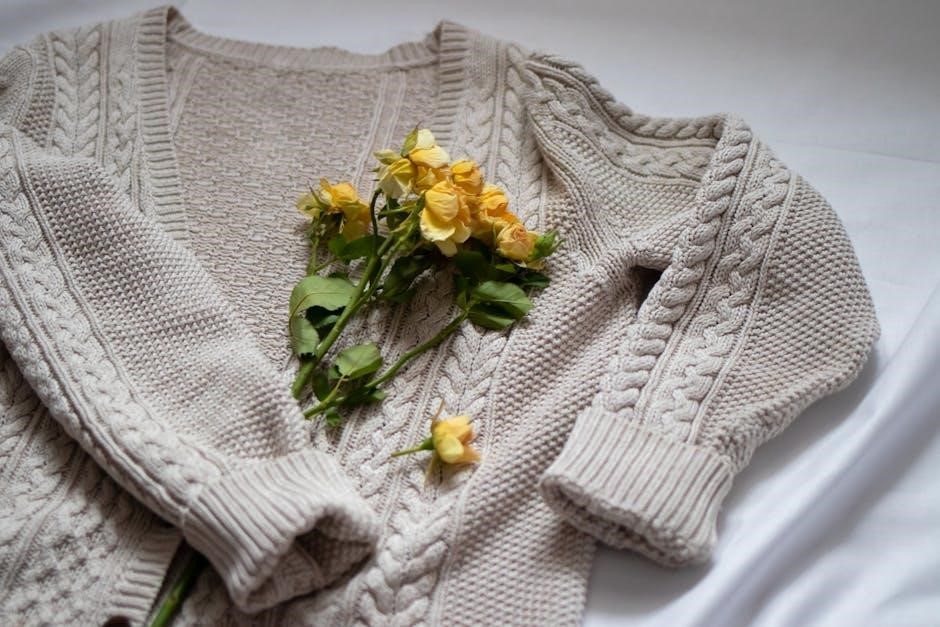
Discover a delightful‚ free PDF pattern for a remarkably easy baby cardigan! This top-down design minimizes seaming‚ making it perfect for knitters of all levels.
Enjoy clear instructions‚ photos‚ and video links‚ offering a seamless crafting experience. Knit with circular or straight needles – the choice is yours!
Why Knit a Baby Cardigan?
Knitting a baby cardigan is a wonderfully rewarding experience‚ offering a handmade treasure for a little one. A free PDF pattern makes this accessible to all‚ regardless of budget! Cardigans are incredibly practical; they provide warmth without the fuss of a full coat‚ layering easily over various outfits.
Beyond practicality‚ a knitted cardigan is a heartfelt gift‚ imbued with love and care. This particular pattern‚ designed for ease‚ is ideal for beginner to intermediate knitters. The top-down construction minimizes seaming‚ a significant benefit for those new to garment making.
Furthermore‚ creating a cardigan allows for personalization – choose colors‚ adjust sizes‚ and even explore different stitch patterns to create a truly unique piece. It’s a tangible expression of affection‚ far surpassing anything store-bought!
Benefits of Using a Free PDF Pattern
Accessing a free PDF pattern for a baby cardigan unlocks numerous advantages! Firstly‚ it’s cost-effective‚ allowing you to indulge your crafting passion without financial strain; These patterns are readily downloadable‚ providing instant gratification and immediate project commencement.
PDF format ensures clarity and portability; you can view the pattern on any device – tablet‚ phone‚ or computer – and print only the pages you need. Many free patterns‚ like those available online‚ are designed with beginners in mind‚ featuring detailed instructions and helpful visuals.
Moreover‚ the availability of video tutorials linked within some patterns provides additional support‚ demystifying complex techniques. This easy‚ step-by-step illustrated pattern is perfect for building confidence and enjoying the creative process!
Materials Needed for Your Project
Gather your yarn – Cascade 220 Superwash is recommended! You’ll also need circular or straight needles‚ scissors‚ stitch markers‚ and buttons for finishing.
Yarn Weight and Type
For this easy baby cardigan‚ a lightweight or DK yarn is ideal. Cascade 220 Superwash is frequently suggested due to its softness and washability – crucial for baby items!
Consider a yarn weight of approximately 200-300 yards (183-274 meters) depending on the size you are creating. Superwash wool is a fantastic choice as it prevents felting when machine washed‚ simplifying care for parents.
Alternatively‚ you could explore other soft‚ baby-friendly yarns like cotton blends or acrylics. However‚ ensure the yarn is gentle against delicate skin. The pattern works beautifully with a variety of yarn types‚ allowing for personalization!
Remember to check the yarn label for gauge information to ensure your finished cardigan matches the intended size.
Needle Size Options (Circular vs. Straight)
This pattern is wonderfully versatile‚ accommodating both circular and straight needles! For circular needles‚ a 16-inch (40cm) circular needle in US size 6 (4.0mm) is commonly recommended. This facilitates the seamless top-down construction.
If you prefer straight needles‚ US size 6 (4.0mm) needles‚ approximately 10-12 inches (25-30cm) long‚ will work perfectly. The choice often depends on your knitting style and comfort level.
Circular needles are particularly beneficial for the yoke and body‚ minimizing the need for seaming. However‚ straight needles are equally viable‚ especially for knitters more accustomed to this method.
The pattern often includes instructions for both needle types‚ offering flexibility and catering to diverse preferences. Two PDFs are sometimes provided!
Other Essential Tools (Scissors‚ Stitch Markers‚ Buttons)
Beyond yarn and needles‚ a few key tools will elevate your baby cardigan knitting experience. Sharp scissors are crucial for cleanly cutting yarn ends – essential for a polished finish.
Stitch markers are incredibly helpful‚ particularly when shaping the yoke or separating sleeves from the body. They clearly delineate sections‚ preventing errors.
Buttons‚ of course‚ are vital for completing the cardigan! Choose small‚ baby-safe buttons that complement the yarn color. Consider the number needed based on the button band length.
A yarn needle (also known as a tapestry needle) is indispensable for weaving in those pesky yarn ends. Finally‚ a measuring tape ensures accurate sizing.
Understanding the Knitting Pattern
This free PDF pattern utilizes top-down construction‚ minimizing seaming. Familiarize yourself with key abbreviations and symbols for a smooth‚ enjoyable knitting process!
Reading a Knitting Pattern: Key Symbols & Abbreviations
Decoding a knitting pattern begins with understanding common symbols and abbreviations. Knit (k) represents the knit stitch‚ the foundation of most knitting. Purl (p) is its counterpart‚ creating a different texture. St(s) signifies stitch(es)‚ while rep means repeat a section.
Inc stands for increase‚ adding stitches to widen the fabric‚ often done by knitting into the front and back of a stitch. Dec means decrease‚ reducing stitches‚ commonly using a knit-two-together (k2tog) or slip-slip-knit (ssk) method.
RS denotes the right side of your work‚ the side that will be visible. WS is the wrong side. CO means cast on‚ the initial step of creating stitches. BO signifies bind off‚ securing the stitches at the end. PDF patterns often include stitch diagrams‚ visually representing the pattern for easier comprehension. Mastering these basics unlocks the beauty of this easy baby cardigan!
Top-Down vs. Bottom-Up Construction
Knitting baby cardigans offers two primary construction methods: top-down and bottom-up. Bottom-up starts with the hem‚ knitting upwards towards the yoke. This requires seaming sleeves and the body‚ potentially adding complexity.
Top-down‚ favored in many easy patterns‚ begins at the neckline‚ knitting down towards the hem. This minimizes seaming‚ often creating a seamless garment – a significant advantage for beginners. The button bands are frequently worked simultaneously‚ eliminating the need to pick up stitches later.
This free PDF cardigan pattern utilizes top-down construction for its simplicity and efficiency. It allows for easy adjustments to length during the knitting process‚ ensuring a perfect fit. The offset button front‚ common in top-down designs‚ adds a charming detail.
Seaming Considerations (or Lack Thereof)
Seaming is often a deterrent for beginner knitters‚ adding a finishing step that can be fiddly and time-consuming. Fortunately‚ many modern baby cardigan patterns‚ including this easy‚ free PDF option‚ prioritize minimizing or eliminating seaming altogether.
Top-down construction‚ as employed in this pattern‚ significantly reduces the need for seaming. The body and sleeves are knitted as one continuous piece‚ decreasing the number of joins required. The integrated button bands further contribute to a seamless finish.
For knitters hesitant about seaming‚ this pattern offers a fantastic introduction to garment construction. The minimal finishing work allows you to enjoy the rewarding experience of creating a beautiful‚ handmade cardigan without the frustration of extensive seaming.

Step-by-Step Knitting Instructions
Follow our clear‚ illustrated guide for casting on‚ knitting the yoke‚ separating sleeves‚ and shaping the body – all detailed in the free PDF!
Enjoy easy-to-follow steps for a beautifully crafted baby cardigan‚ perfect for beginners and experienced knitters alike.
Casting On and Initial Rows
Begin your adorable baby cardigan by casting on stitches‚ typically using a long-tail cast on for a stretchy edge. The number of stitches will depend on the chosen size – consult the free PDF pattern for specific measurements (e.g.‚ 20 stitches for 0-3 months).
Work the initial rows in a simple knit stitch‚ establishing the foundation for the yoke. This section often involves ribbing (knit one‚ purl one) to create a neat and elastic neckline. Maintain consistent tension for a smooth fabric.
The pattern will guide you through establishing the correct stitch count and length for the yoke before separating for sleeves and body. Pay close attention to the instructions to ensure accurate shaping from the very start!
Knitting the Yoke (Neckline)
The yoke is the upper portion of the cardigan‚ shaping the neckline and shoulders. This section is often worked in the round‚ creating a seamless construction. Many easy patterns utilize simple knit and purl stitches to form gentle shaping.
Increase stitches evenly throughout the yoke to gradually widen the chest area. The free PDF pattern will provide precise instructions on where and when to increase‚ ensuring a well-fitted garment. Common techniques include ‘knit front and back’ increases.
Pay attention to the pattern’s guidance on yoke depth‚ as this determines the overall length of the cardigan. Regularly check your gauge to maintain the correct size and proportions throughout this crucial stage.
Separating Sleeves and Body
After completing the yoke‚ it’s time to divide the stitches for the body and sleeves. This is typically achieved by placing stitch markers to delineate each section. The free PDF pattern will clearly indicate where these markers should be positioned.
Slip the appropriate number of stitches onto waste yarn or stitch holders for the sleeves‚ leaving the remaining stitches on your needles for the body. This creates a temporary pause in sleeve knitting.
Continue knitting the body of the cardigan back and forth in rows (or in the round‚ depending on the pattern)‚ until it reaches the desired length. The sleeves will be picked up and knitted later‚ completing the cardigan’s shape.
Knitting the Body of the Cardigan
With the sleeve stitches held‚ focus on knitting the body of the baby cardigan. The free PDF pattern will guide you through the stitch pattern – often a simple knit or garter stitch for ease.
Continue working back and forth in rows (or rounds‚ if the pattern is circular) until the body reaches the desired length‚ referencing the pattern’s measurements for your chosen size (0-3‚ 6-12‚ or 18-24 months).
Pay close attention to any shaping instructions‚ such as decreases or increases‚ to achieve a flattering fit. Remember to check your gauge periodically to ensure accurate sizing throughout the knitting process.
Knitting the Sleeves
After separating from the body‚ begin knitting the sleeves of the baby cardigan. The free PDF pattern typically involves picking up the held sleeve stitches and continuing in rounds or rows.
Most easy patterns utilize a simple knit or garter stitch for the sleeves‚ ensuring a quick and straightforward process. Incorporate any shaping instructions‚ like increases‚ to create a gentle taper from the shoulder to the cuff.
Regularly check the sleeve length against the pattern’s measurements for your chosen size. Knit both sleeves identically‚ ensuring they are the same length and width for a balanced cardigan.
Button Band Creation
Create neat button bands worked simultaneously with the cardigan body‚ eliminating the need to pick up stitches later. Follow the free PDF’s instructions for buttonhole placement!
Working Buttonholes
Buttonholes are a crucial element of a cardigan‚ and this pattern simplifies the process! The free PDF provides clear guidance on creating neat and functional buttonholes directly within the button band. Typically‚ these are worked by creating a small opening within the knitted fabric‚ often using a yarn over technique that’s then secured on subsequent rows;
Detailed step-by-step instructions‚ potentially accompanied by photos or video links (as mentioned in resources)‚ will guide you through each stage. Pay close attention to the specified number of rows between each buttonhole‚ ensuring consistent spacing for a polished finish. Remember to consider the size of the buttons you’ve chosen when determining the buttonhole dimensions. A well-executed buttonhole adds a professional touch to your handmade baby cardigan!
Attaching the Button Band
The beauty of this easy baby cardigan pattern lies in its streamlined construction! The button bands are often worked simultaneously with the body‚ eliminating the need to pick up stitches later. However‚ if a separate band is required‚ the free PDF will detail a simple attachment method.
Typically‚ this involves carefully aligning the button band with the cardigan front and using a yarn needle to securely sew it in place. A mattress stitch is often recommended for an invisible finish. Ensure the buttonholes align correctly with the button placement. Take your time and weave the yarn ends in securely for a durable and professional-looking result. A neatly attached button band completes this adorable handmade garment!
Finishing Touches
Complete your adorable baby cardigan with essential finishing! Weave in all loose ends‚ block for a polished look‚ and carefully sew on the buttons.
Weaving in Ends
After completing your beautiful baby cardigan‚ it’s time to tackle those pesky yarn ends! This step‚ while seemingly small‚ significantly impacts the finished look and durability of your project; Using a tapestry needle – preferably with a large eye – carefully thread each yarn tail.
Weave the end back and forth through several stitches on the wrong side of the work‚ following the path of the yarn as much as possible. Avoid pulling too tightly‚ which can distort the fabric. For extra security‚ change direction a few times.
Trim the ends close to the fabric‚ being careful not to cut any of the knitted stitches. A neat and secure finish ensures your little one’s cardigan is safe and cozy‚ free from unraveling!
Blocking the Cardigan
Blocking is a crucial final step that refines the shape and appearance of your knitted baby cardigan. Gently wet the cardigan – hand washing is best‚ using lukewarm water and a mild detergent. Avoid harsh agitation that could felt the yarn.
Carefully remove excess water by pressing‚ not twisting or wringing. Lay the cardigan flat on a clean towel‚ reshaping it to the desired dimensions. Pin the edges in place using rustproof pins‚ paying attention to the button bands and sleeves.
Allow the cardigan to dry completely‚ away from direct heat or sunlight. Blocking evens out stitches‚ enhances drape‚ and gives your finished piece a professional‚ polished look!
Sewing on Buttons
Attaching the buttons securely is the final touch to your adorable baby cardigan! Using a yarn tail or matching thread‚ carefully position the buttons on the button band‚ aligning them with the buttonholes. Ensure they are evenly spaced for a neat appearance.
Thread your needle and bring it up through one buttonhole‚ then through the button‚ and back down through the adjacent hole. Repeat several times for a strong attachment. A knot on the inside of the cardigan secures the thread.
Double-check that the buttons are firmly attached and won’t pose a choking hazard. Your beautifully knitted cardigan is now complete and ready for a little one to enjoy!

Pattern Variations & Customization
Explore size adjustments for 0-3‚ 6-12‚ and 18-24 months! Experiment with waffle or textured stitches‚ or add cables for unique designs.
Adjusting Size for Different Ages (0-3‚ 6-12‚ 18-24 months)
Scaling this easy baby cardigan pattern to fit various ages is straightforward. The free PDF typically provides measurements for chest circumference‚ crucial for accurate sizing. For the 0-3 month size‚ aim for approximately a 20-inch chest.
Moving to the 6-12 month range‚ increase the chest measurement to around 23 inches‚ requiring slight adjustments to stitch counts and row lengths. Finally‚ for the 18-24 month size‚ a 25-inch chest is generally desired.
Remember to knit a gauge swatch to ensure your finished cardigan matches the pattern’s intended dimensions. Adjust needle size if necessary to achieve the correct gauge. Incremental increases in stitch counts will ensure a comfortable and well-fitting garment for your little one.
Exploring Different Stitch Patterns (Waffle Stitch‚ Textured Stitch)
While the base free PDF pattern offers a simple‚ classic knit‚ don’t hesitate to experiment with stitch textures! The Waffle Stitch‚ a multiple of 3 stitches‚ adds lovely dimension and warmth. It’s surprisingly easy to learn and creates a beautiful‚ cozy fabric.
Alternatively‚ explore other textured stitches like seed stitch or moss stitch for subtle visual interest. These stitches are also beginner-friendly and require minimal concentration.
Consider how the chosen stitch pattern will affect the drape and overall look of the cardigan. A more textured stitch will create a thicker‚ warmer garment‚ while a simpler stitch will result in a lighter‚ more flowing cardigan.
Adding Cables or Colorwork
For knitters seeking a slight challenge beyond the basic free PDF pattern‚ incorporating cables or colorwork can elevate the baby cardigan’s design. Simple cable panels‚ like a single twist cable repeated down the front‚ add a classic touch without being overly complex.
Colorwork‚ such as stripes or small motifs‚ introduces visual appeal. Consider using self-striping yarn for an effortless color effect. If venturing into more intricate colorwork‚ ensure the pattern remains readable and doesn’t add excessive bulk.
Remember to adjust needle size if adding cables‚ as they tend to make the fabric denser. When introducing colorwork‚ manage floats carefully to prevent puckering.

Resources and Further Learning
Explore online knitting communities and forums for support! Find helpful video tutorials and websites offering free knitting patterns‚ expanding your skills.
Helpful Video Tutorials
Embarking on a baby cardigan project? Numerous video tutorials can visually guide you through each step of this easy knitting pattern. Search platforms like YouTube for “baby cardigan knit top down” or “beginner cardigan knitting” to uncover a wealth of resources.
Specifically‚ look for tutorials demonstrating the cast-on method used in your pattern‚ yoke construction techniques‚ and how to separate sleeves from the body. Visual learners will greatly benefit from seeing the stitches formed and the overall process unfold. Don’t hesitate to pause‚ rewind‚ and re-watch sections as needed!
Many tutorials also cover essential skills like weaving in ends and blocking‚ ensuring a professional finish. Consider searching for videos related to specific stitch patterns if you choose a variation beyond the basic knit and purl. These visual aids will boost your confidence and help you create a beautiful‚ handmade cardigan.
Online Knitting Communities and Forums
Connecting with fellow knitters is invaluable when working on a project like this easy baby cardigan! Explore online communities and forums dedicated to knitting‚ such as Ravelry‚ KnittingHelp‚ or dedicated Facebook groups. These platforms offer a supportive environment to ask questions‚ share progress‚ and receive feedback.
Search within these communities for discussions related to the specific pattern you’re using or similar baby cardigan designs. You’ll find experienced knitters willing to offer advice on tricky sections or suggest modifications. Don’t be afraid to post photos of your work and ask for help – most knitters are happy to assist!
These online spaces also provide inspiration and a sense of camaraderie. Discover new techniques‚ learn about yarn options‚ and celebrate your knitting achievements with a vibrant community of like-minded individuals.
Recommended Websites for Free Knitting Patterns
Finding free baby cardigan patterns is easy with numerous websites dedicated to knitting! Ravelry is a fantastic resource‚ offering a vast database of patterns‚ including many free options. LoveCrafts and Yarnspirations also host a wide selection of free knitting patterns‚ often with detailed instructions and helpful visuals.
Look at websites like AllFreeKnitting‚ which curates free patterns from various sources. Hobbii provides patterns designed by independent designers‚ some available for free download. Dandelion and Daisy offers charming baby cardigan patterns‚ and Better Homes & Gardens occasionally features free knitting projects.
Remember to check the pattern details for yarn requirements‚ needle sizes‚ and skill level before starting. Happy knitting‚ and enjoy creating a beautiful‚ handmade cardigan!